The CSIB Certificate in Somatic Intimacy Bodywork Practitioner Training Program

Trusting Spontaneity

We are dedicated to creating, maintaining, and updating standards of ethical practice, supporting practitioners in realising their creative potential.

We are dedicated to facilitating practitioners who want to embody their purpose - pleasure activism in service to enhancing heartfelt gratitude.

By participating in humanity's ecosystems, we can shape the politics of the civilisations we inhabit.

Purpose can be understood as the erotic charge of our libido, which magnetises us to be part of the repair needed to inhabit new ways of being that authentically contribute to us indigenously coming home to belonging to our erotic, emotional, and sensual naturalness.

This is the core of ‘pleasure activism’ and is politically influential in supporting humans to feel more of themselves and to make decisions informed by sensory receptivity, with enough granularity in language to form bridges out of loneliness.

We are dedicated to facilitating practitioners who want to embody their purpose - pleasure activism in service to enhancing heartfelt gratitude.

Only then can humanity be released from the grips of the left brain hologram in the reflections of living that dominate so many people’s lives, commodifying their bodies and each other, driving so many of us into separation with our bodies giving up on us after being done to so many times. Opening receptivity opens gratitude in heartfelt connections and intimate belonging, rather than in expensive, materialistic compensation, which keeps gratitude out of reach.
Second Year - The 12-month Certificate in Somatic Intimacy Bodywork Practitioner Program (CSIB)

“This training is without a doubt the most comprehensive, holistic, and ethically sound training I could have hoped to come across. I looked at many different trainings and coaching programs in the field of sexuality, tantra, and embodiment, and when I read through what was offered in this training, I was an immediate FULL BODY YES! I’m so grateful I honoured that yes as this really has been such a rich, profound, and transformational journey.”

Your Application and Enrolment Process

CSIB - Certificate in Somatic Intimacy Bodywork Practitioner Program

Course fees - £6,900 (+ 20%VAT ) September 2027 - July 2028

  • Stage 1 - Enrolment for The CSIB Somatic Intimacy Bodywork Practitioner Program

    After completing Year One CSI, we welcome you to arrange an Enrolment meeting with Katie Sarra and Dr Phoebe Garland to ensure this is the right training for you at the right time. We will explore and reflect on your readiness to join the training; this includes financial readiness, availability for the study and practice time commitments.

    You have the opportunity to join the second year program, where all you have learned about guiding self-touch is then transformed through spiral learning into the potential for practitioner touch to be included in your practice.

    The CSIB Training Program begins in September, annually giving you space and time after completing year one for those of you who wish to follow through by expanding your practice as a Somatic Intimacy Coach.

    This second year offers deepening and expanding of your skill base and is the route towards becoming a Somatic Sex Educator and Professional Supervisor in years three and four.

    This second CSIB year includes an 11-day in-person intensive in October 2027, held in Devon, UK. The 2028 Retreat location is to be confirmed.

    Here we meet together daily for in-person Wheel of Consent training, Pleasure activism practices, and you have 1-1 coaching in three sessions each day in the Practitioner, Client and Witness roles.

    As we will already know you very well by this stage, we invite you to discuss this possibility with us, aligned with your visionary intentions, with the aspects of humanity you are in service to. There are a maximum of 12 places in the second year to meet our required ethical standards with the 1-1 coaching.

    The Course fees are (£6,900 +20% VAT). The Enrolment fee of 1/3 of the course fees is due 7 days after enrolment (£2,300 + 20% VAT))

    The 2027 Devon venue is set in the rural countryside, within easy reach of Totnes. The total cost is £420 for 12 nights, allowing you to arrive and settle in the day before and leave on the morning after. We require a 50% deposit for the Embodiment retreat by September, in preparation for the October start date.

    This venue is residential and self-catering, with a large, fully equipped kitchen and a communal dining area suitable for cooking either individually or together.

  • Stage 2 - Formal offer of place

    After your Enrolment interview, and we have decided this is a harmonious fit, we will write to you with a formal offer of a place in the upcoming cohort, along with guidance on the next steps towards enrolment. Your enrolment is secured with an enrolment deposit.

    • The enrolment fee of 1/3rd of the course fees is payable 7 days after your formal offer of place

    • £2,300 (+ 20% VAT)

    • We will send you your invoice to secure your place directly after you have been accepted onto the training

    • If we are not in a position to offer you a place at this time, for example, if we have reached capacity (12 participants for CSIB), we will offer you the opportunity to take the first available place in the next intake.

  • Final stage of your enrolment in preparation for your journey ahead

    • The remainder of the course fees is due by July 2027

    • £4,600 (+ 20% VAT)

    • You will receive your invoice for this remaining amount in one amount, or you can choose to pay in a payment plan in the lead up to July.

    • After we have received the remaining course fees, we invite you into our Relational Harmony Institute learning management platform to join the CSIB 2027 forum and start meeting each other, viewing the course materials, orienting yourself and preparing for your journey ahead.

    • The CSIB 2027 Training program begins annually on September 1st each year.

    • Any enquiries or questions, please email Katie and Phoebe at home@relationalharmony.institute

Our Training program is experienced in live 1-1 and group meetings

This program emphasises experiential learning. As a certified CSIB, you will engage with all CSIB practices firsthand, laying the foundation for ethical confidence that supports your personal and professional growth and transformation.

This approach ensures that when you work with clients, your insights and presence are rooted in authentic, embodied experience rather than theoretical knowledge alone.

Two live Wednesday webinars each month. 5- 7.30 pm UK time

The twice-monthly webinars are interactive, live community meetings structured around live demos, teaching, reflective practice, and Q&A, supporting your participation in the training as everyone comes together for community learning.

During these webinars, you will have opportunities to meet in groups of 4 in your home groups, which you will be assigned to at the beginning of the training. This offers you peer-led time in a small group to reflect on your learning and to have each other’s backs throughout the training, serving as a ‘go-to’ place for support. Bonds in these groups often form a foundation of trust and belonging within peer supervision.

We encourage you to bring any questions to your coach, to a student support or tutorial meeting, or to the community Q&A at the end of each webinar.

The 11 Day In-Person Embodiment Retreat is in October 2027.

The Earth Ceremony

We begin the embodiment retreat with our Earth Ceremony, where you add soil from your home to our collective bowl, which holds earth from every embodiment intensive over the past 12 years, plus soil from many years before that and beyond. This earth represents the heartfelt memories of our international community of pioneering edge walkers. Learning to feel more and fear less as pleasure activists - together we can do this, as elephants do, resonating through the grounded belonging we have with each other in our worldwide community. You are invited to share a meaningful object that aligns with your intentions for this embodiment retreat and your path with heart in this lifetime.

At the end of each day, we harvest learnings and reflections with one or two of you stirring the dirt as we integrate the day.

You receive 1-1 coaching from a member of the teaching team during each of your daily bodywork practice Sessions.

This aspect of communal learning is where we have witnessed profound growth in everyone, becoming more creatively confident practitioners, guiding somatic practices, and enhancing fluency with the REEF coaching model.
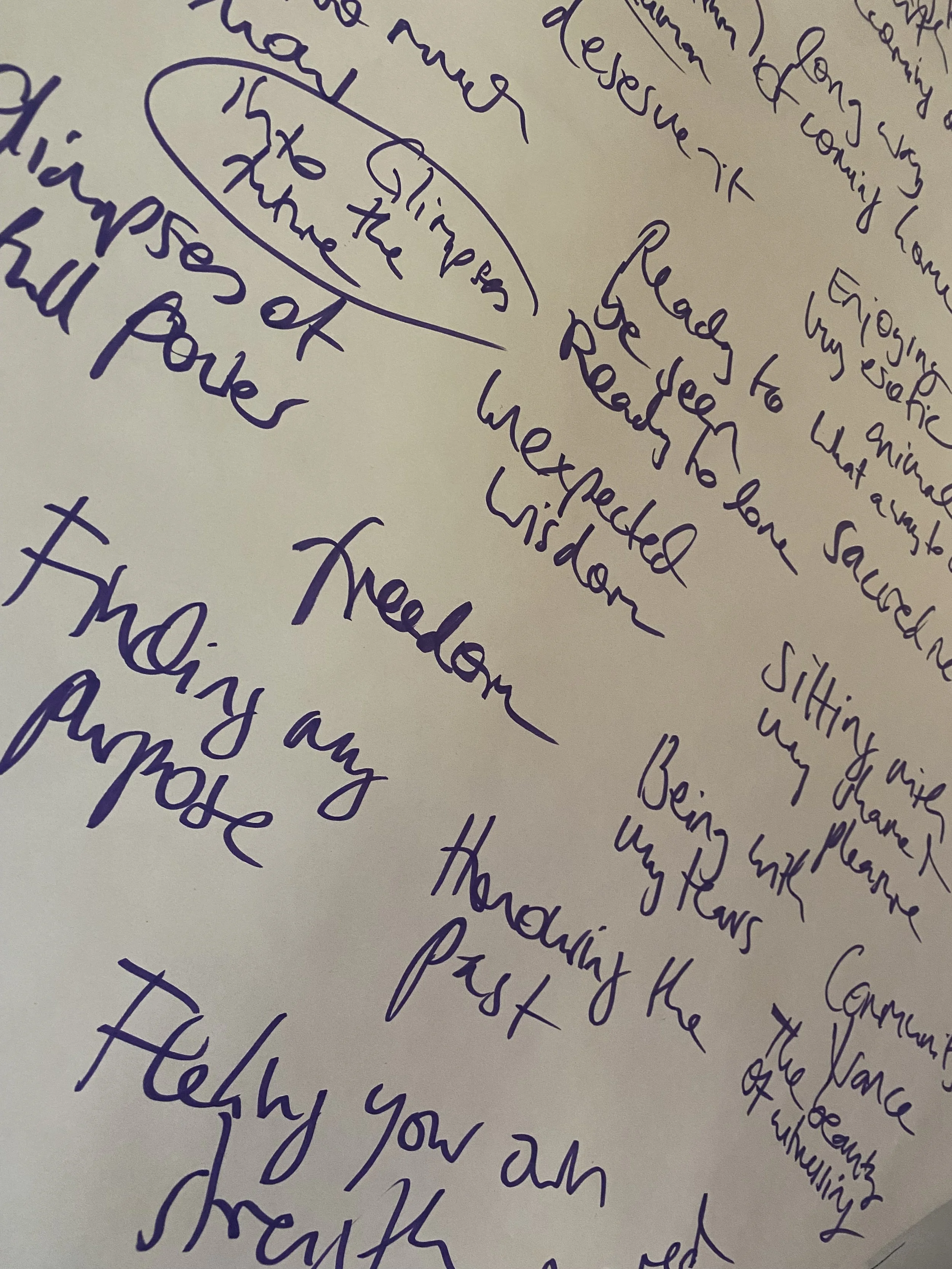

“The CSIB in-person week gave me a taste of my potential as a Sexological Bodyworker. The space was held well, and each learning objective felt like it was created in honour of regulation, integration, and trusting spontaneity. A beautiful, creative, and embodied way to learn. Both my professional self and sense of self have been updated.”

- Tegan Hecht, CSI & CSIB Graduate 2024

For each month of the training program, there is a detailed schedule featuring research explorations, webinars, and study materials.

  • September, October

  • October - The 11-day in-person embodiment retreat in the UK.

  • November, December

  • From 20th December is a holiday

  • January Holiday

  • February, March

  • April, May & June - Supervised practicum

Reflections and Sharing

  • On Mondays, you will post reflections based on your sessions in both roles. These reflections should be 300-word summaries of your learning experiences. You can incorporate various formats, such as:

    • Voice recordings

    • Images

    • Videos

    • Poems

    • Dance self-expression videos

    • Photos of art pieces

Sharing these reflections within our private community supports collective learning. Preparation for Research Explorations. Each RE preparation lesson will offer guidance and opportunities for more in-depth reading and viewing. Some REs may require a few days dedicated to solo practice or study in preparation.

You will receive monthly 1-1 coaching to support your confidence with facilitating the REEF (relational, emotional & erotic fluency) coaching model.

Meetings are once a month. These are 1:1 coaching sessions to support your growth. Phoebe and Katie will be alongside you throughout your training, and you will receive 1:1 tutorials with Katie and written coaching from Phoebe, including responses to your forum posts.

Supervision - As you become more confident in your coaching skills, your sessions with your Supervisor will also address relational dynamics, including projections and transferences in your working relationships.

Your relationship with your supervisor will enhance your unique creativity as a Somatic Intimacy Bodywork Practitioner.

Weekly Research Explorations Overview - Structure of the Sessions

  • Each week features ONE Research Exploration.

  • You will work online together with your classmates to experience both the practitioner and client roles.

  • Assigned practice partners will be provided, and individual scheduling is necessary to coordinate convenient times for everyone.

A monthly timetable will be shared, detailing the dates and partners to enable you to plan ahead effectively.

You will be practising the use of session structure in-person building on your enhanced skill base from the emo,diment retreat using our REEF Coaching model, including Clean Language, Body Poem and Wheel of Consent practices, trauma first aid, and the 5-Step repair processes in the following areas of session structure:

  1. Welcome and arrival, transitioning into the session.

  2. arrival embodiment practice to attune and open sensory receptivity and resource

  3. checking in to see what is present and review learning since the last session to illuminate learning edges and translating these into somatic practices

  4. Eliciting the learning intentions of the session, structured within the bigger picture the client is envisioning

  5. Co-creating the practice agreement for the session with somatic assessments and a choice of somatic practices

  6. Facilitating the chosen somatic practice

  7. Installation to support the client’s integration

  8. Client reflections to harvest insights and learning

  9. Co-creating home practice to support somatic transformation

  10. Facilitating empowered client feedback

Recorded Sessions - From November onwards, you will be recording your in-person volunteer client sessions - one per month. You will receive monthly 1-1 coaching to support your confidence

This is where the core of spiral learning in professional development occurs as you inhabit your practitioner role. It is the most significant period of growth.

  • November - you watch and make notes yourself

  • December - you watch and send to your coach, and send your learning reflections in preparation for your monthly coaching call

  • From the 20th of December is holiday

  • January - Holiday

  • February & March - you watch and send to your coach, and send your learning reflections in preparation for your monthly coaching call

  • April - May - June - During Supervised Practicum, you repeat this process for four recorded sessions (You are sending in one recording to be assessed every four sessions.

Graduates have a range of options when it comes to selecting areas of specialisation:

Our training equips practitioners with a comprehensive toolkit for deepening embodiment through somatic assessment practices that enhance the granularity of symbolic representation.

All the practices involve the use of Body Poem, which facilitates radical acceptance, along with Wheel of Consent practices for doing something when change is desired. Practitioners are trained in the Right Use of Power to ensure consensual relationship agreements between practitioner and client.

  • Somatic Intimacy Coaches (CSI) facilitate guided self-touching for clients to foster personal empowerment with enhanced abilities to participate in this one and precious life.

  • Somatic Intimacy Bodyworkers (CSIB) can offer a wide range of bodywork, massage, and mapping skills, with intimate touch when appropriate, including mindful self-pleasure practices, scar tissue remediation, external & internal genital and anal mapping and massage, belly massage, breast massage, and new additions to the syllabus this year.

You can choose to focus on individuals, couples, or group work, with specific aspects of humanity that interest you.

Themes of belonging, sexual freedom & empowerment, confidence & creativity, love & loss, radical acceptance & justice run throughout our lives in different ages and stages, influenced by different cultural contexts.

These might be Age-specific developmental areas of focus (e.g., young adulthood, midlife, menopause, and older age ranges), Specific cultural backgrounds, Specific genders (cis male, cis female, non-binary, queer, and heterosexual-identified people). Specific collective power groups representing aspects of being human that are not represented with ease of participation in mainstream society. e.g., the International Little People's Association, Societies for the Visually Impaired, Multiple Sclerosis Societies, victims of domestic abuse, victims of child abuse, refugees, The Outsiders organisation, etc

Erotic massage lineages

Erotic massage, in many traditions, is a specialised practice with numerous training paths and schools. These stem from a combination of spiritual paths involving ritualised practices and ceremonies with Eastern and/or Western understandings about energy, anatomy and eros.

In the West, Kenneth Ray Stubbs and Joseph Kramer both simultaneously became teachers of erotic massage, introducing and sharing the benefits of these practices to widen audience awareness in America during the 1970s and 80s.

Kenneth Ray Stubbs invented the term "Sexological Bodywork" and suggested that Joseph use it when applying for recognition from the State of California. They both designed sequenced massage techniques for practitioners to follow that are decoupled from arousal from partner engagement.

Kenneth Ray Stubbs wrote many books with illustrations and diagrams that combine shamanic and Eastern spiritual paths with these practices, offering somatic openings into altered states of consciousness and multidimensional existence. He referred to himself as The Sexual Shaman and was dedicated to exploring the multi-dimensional realms of consciousness obscured by our third-dimensional awareness. He designed the erotic touch practices of Chiliuquay Quodoushka Phoenix Fire Women and Phoenix Fire man initiatory training that sits in the centre void of the Wheels and Keys of the Twisted Hairs Metis Medicine Societies Sundance Path of the Deer Tribe

Ray Stubbs reframed our understanding of gender and identified the deep granularity of these concepts, liberating us from the selective negligence of dualism. Living close by Ray in Tucson, Arizona, Nut Tmu-Ankh SaNut brought Egyptian lineages of sacred sexual practices into Western awareness. She contributed to his book, "The Sacred Prostitute," which was groundbreaking at the time and inspired many to understand the healing nature of eros and massage in integrating exiled wounds and selective negligence of adaptive and stunted receptivity.

Sacred intimates, sex workers, and people living indigenously with nature all over the world inherently understand the power of harnessing eros for healing, and this book, ‘The Sacred Prostitute,” articulated this knowledge into a recognisable understanding that brought acceptance and motivation to continue despite the tides of shame against professional erotic practices. While some may burn alive in the exiled aspects of humanity that are awakened by the flames of eros, it is the fastest route to life integration when harnessed with kindness and attunement.

The Sacred Prostitutes referenced in this book healed men coming home from battle after harrowing experiences of violence, loss and grief. These ritualised practices supported the integration of these emotional and physical wounds, preparing them to return to their families with restored harmony.

We create opportunities for erotic fluency intimacy training where emotional hangovers are limited, with the focus being on education and therapy for enhancing this fluency.

“The training is a thorough world of exploration, reflection and deep learning. It embraces the richness of the soma-sexual-spiritual experience while weaving necessary teachings of science throughout. The micro-skills of somatic recognition, the wheel of consent and the right use of power are such impactful aspects of relating to ourselves and others.

To me, the diverse teachings in the RHI training program represent a unique missing piece to most erotic and sex education spaces that I feel are devastating to be without, especially as practitioners who want to work in 1:1 scenarios.

Learning through the RHI brought me an embodied understanding of what it means to be in service. I cried, laughed and felt utterly supported throughout this year of training and learning while being constantly reminded of my deepest whys around this work. 

Katie and Phoebe embrace each lesson with such compassion, acceptance and warmth. Paired with a wealth of knowledge and experience from them both. "

- Amy Rumbolt - CSI & CSIB Graduate - 2026.

Professional Membership
Upon completion of all requirements, The Institute for Relational Harmony Studies & Research awards the Certificate in Sexological Intimacy Coaching (CSI) in the First year, Sexological Bodywork (CSB) in the second year, and in the third year the Coaching Certificate of Somatic Sex Education (CSSE) and in the fourth year the advanced CSSE Professional Supervisor Certificate of Somatic Sex Education.

Students of this professional training can become Student members (and on certification, Professional members) of The Association of Certified Sexological Bodyworkers (ACSB), the Somatic Sex Educators’ Association of Australasia (SSEAA) and the Association of Somatic and Integrative Sexologists (ASIS). Certified graduates can be admitted to the World Association of Sex Coaches (WASC) with no further requirements.

This course is recognised by The Association of Somatic and Integrative Sexologists as offering a training of sufficient depth for practitioners to be eligible for insurance for their work. See the-asis.org for more details.

The CSI & CSIB Curriculum content

  • You can choose to focus on individuals, couples, or group work, with specific aspects of humanity that interest you.

    Themes of belonging, sexual freedom & empowerment, confidence & creativity, love & loss, radical acceptance & justice run throughout our lives in different ages and stages, influenced by different cultural contexts.

    These might be Age-specific developmental areas of focus (e.g., young adulthood, midlife, menopause, and older age ranges), Specific cultural backgrounds, Specific genders (cis male, cis female, non-binary, queer, and heterosexual-identified people). Specific collective power groups representing aspects of being human that are not represented with ease of participation in mainstream society. e.g., the International Little People's Association, Societies for the Visually Impaired, Multiple Sclerosis Societies, victims of domestic abuse, victims of child abuse, refugees, The Outsiders organisation, etc

  • Embodied Ethics as a Somatic Intimacy Coach

    • Presence - the ability to show up, to be fully present with availability and receptivity, to listen and to witness your client with compassion and radical acceptance

    • Self-awareness is the ability to choose where to focus your attention, to remain aware of your inner experience while also being present with your client, to be aware of your intuition, to be aware of your agendas and tendencies as they arise, to be committed to ongoing self-reflection, to recognise attraction/dis-attraction, and to be able to work outside of this.

    • The ability to acknowledge the limitations of your skill base; knowing when to seek supervision or further training; knowing when to refer a client to another practitioner

    • The ability to understand how power dynamics and altered states influence consent.

    • Understanding that consent changes from moment to moment and that it is the practitioner's responsibility to check frequently that a client is not enduring or dissociating and the ability to update agreements when dysregulation occurs.

    • Ability to learn - the ability to receive coaging feedback and to unlearn conditioned patterns to support updating versions of self.

    • Care for others: the ability to care and to demonstrate care for others; the desire to serve your client; the willingness to be open to feedback and to hear another's perspective; attunement to another.

    • Self-regulation - response flexibility and emotional and erotic fluency - the ability to notice your own responses and the capacity to choose how you respond to them, including the ability to put intense reactions to one side and to remain in service to your client; the ability and willingness to make time to come back to this after the session; the ability to move between client and practitioner role as a student during this training

    • Self-care - the ability to notice your needs and to respond to them during a session and outside of sessions; taking responsibility for your self-care so that you are well-resourced to be in service; knowing when you are not fit to see clients; knowing when you need support and being able to reach and request this.

    • Curiosity - the ability to bring open-minded, non-judgemental, kind curiosity to every client and every session

    • Humility - the ability to be comfortable with not knowing and to allow the client to be the expert of their own experience; the willingness to receive guidance and feedback from the client about what they want; the skills to facilitate clients to feel able to give feedback

  • Graduates have a range of options when it comes to selecting areas of specialisation:

    Our training equips practitioners with a comprehensive toolkit for deepening embodiment through somatic assessment practices that enhance the granularity of symbolic representation.

    All the practices involve the use of Body Poem, which facilitates radical acceptance, along with Wheel of Consent practices for doing something when change is desired. Practitioners are trained in the Right Use of Power to ensure consensual relationship agreements between practitioner and client.

    • Somatic Intimacy Coaches (CSI) facilitate guided self-touching for clients to foster personal empowerment with enhanced abilities to participate in this one and precious life.

    • Somatic Intimacy Bodyworkers (CSIB) can offer a wide range of bodywork, massage, and mapping skills, with intimate touch when appropriate, including mindful self-pleasure practices, scar tissue remediation, external & internal genital and anal mapping and massage, belly massage, breast massage, and new additions to the syllabus this year.

  • Pleasure Activism - Core Erotic Theme Explorations

    • Coaching another to explore hidden drivers of core erotic themes

    • Facilitating transformation of shame through the exhibistionic routes to shame free.

    • Facilitating the integration of voyeurism, exhibitionism and the freedom in trusting spontaneity

    • A working understanding of troublesome turn-ons and the indirect routes to pleasure

    • Understanding the ‘languages of love’ and facilitating another to notice, value, trust and communicate what they want

    • Facilitating the direct routes to pleasure as liberation from addiction and fetish routes to pleasure

    • Radical acceptance with the multidimensional realms and aspects of sexual expression

    • Enhancing expansions of consciousness in adventure and facilitating play

    • Facilitating somatic self-pleasure practices informed by a working understanding of attachment needs.

    • A working understanding of Pleasure Activism

  • The Wheel of Consent

    The Somatic Intimacy Coach training program has evolved to facilitate teaching and practice of the Wheel of Consent online and in person.

    In the second year of the CSIB Bodywork Practitioner Training Program, you facilitate all the bodywork modalities using the WOC in person in the practitioner and client roles and learn the difference between this and practising as peers.

    The 11-day embodiment retreat in year two includes daily WOC practice to deepen these essential relationship micro-skills to support your confidence in facilitation.

    You will gain skills in the following:

    • An understanding of the Wheel of Consent and the ability to work within the Wheel of Consent

    • To have a clear understanding of the four quadrants and the ability to inhabit each quadrant and facilitate others in these relationship agreement roles

    • The ability to teach a basic understanding of this to others and to coach others in enthusiastic, empowered consent

    • The ability to recognise the difference between "willing to" and "want to" and to recognise when a client is not in enthusiastic consent

    • The ability to understand how power dynamics and altered states influence consent

    • Understand that consent changes from moment to moment and that it is the practitioner's responsibility to check frequently that a client is not enduring or dissociating and be able to update agreements when dysregulation occurs.

  • Developing Power Awareness

    Developing your Power Awareness skills in the following areas:

    From our experience in training and certifying practitioners and from the public and private grievances across the board in many professional fields, we have learned that practitioners may often lack awareness and skill, especially in the following areas:

    • Awareness of power dynamics, dual roles, power and consent, systemic power and privilege

    • Awareness of additional power dynamics and responsibilities when working with altered states, trauma and arousal

    • Misuse of power wounds - An awareness of your relationship with power and historical and current wounding from misuse of power

    • Understanding the power differential and the responsibilities of up-power roles as a practitioner

    • Understanding the vulnerabilities of down-power roles and cultural and internalised influences that may affect a person's confident self-expression.

    • The ability to track your impact as a practitioner and recognise when it may differ from your intention.

    • Rupture and repair - duty of care - The ability to use the five-step repair process when a client experiences unintended impact with you as a practitioner (acknowledgement, understanding, remorse, repair, learning)

    • Honouring the client's experience of harm with open receptivity and empowering clients to feel confident about voicing and sharing upset or impact as a result of your or another's power and influence.

    • An understanding of how you notice your reactions to receiving difficult feedback and what supports you to feel resourced to inhabit your duty of care as a practitioner at the effect of these reactions and to transform these into responsiveness so that you are available to facilitated the five-step repair process.

    • A commitment to seek supervision and to apply the repair process whenever another has been impacted.

    Honouring our Right Use of Power teacher, Dr Cedar Barstow - Founder of the Right Use of Power Institute

  • Ability to participate

    From your up-power role as a practitioner, you will enhance your awareness in the following areas.

    • Coaching all aspects of identity with ethical understanding and radical acceptance of the differences between sexual expression, gender identity and sexual orientation.

    • Coaching another in enhancing their personal power and role power

    • A working understanding of the ranges of visible and invisible disabilities and the ability to facilitate guided practices that are inclusive and adaptive to different learning styles, enhancing ability to participate

  • Some common presenting concerns you might wish to specialise in

    Some common presenting concerns:

    • Overcoming loss of libido, difficulties with managing arousal or achieving orgasm

    • Recovery after surgery with our tried and tested scar tissue remediation practices that transform scars and gain flexibility

    • Preparation and recovery from genital reconfiguration surgery and re-routing new orgasmic/pleasure pathways

    • Overcoming Emotional pain, anxiety, and loss of confidence in relationships

    • Navigating and recovering erotic confidence during and after childbirth, menopause or any other event in life where the relationship with our body is changing.

    • Recovery from relationship grief and reclaiming your life.

    • Intimacy training for those lacking experience or who are virgins

    • Healing from historical traumas that affect intimacy and confidence, and learning new ways of strengthening resilience and robustness in relationships.

    • Overcoming feeling numb with loss of sensation and learning new ways of feeling more of yourself

    • Developing ejaculatory choice and enhancing your range of pleasure

    • Finding new ways of managing sex and porn addiction or fetish entrapment.

    • Support with navigating challenging ‘turn-ons’, intrusive inner dialogue or imagery and learning new ways of being that effectively manage and transform your life from passivity to agency.

    • Overcoming loss of confidence with identity and enhancing body image confidence

    • Wanting to explore sexual orientation concerns and discover what and who is attractive

    • Expanding sexual and intimacy repertoire and learning new intimacy relationship skills

    • Changing outdated strategies that are not working for you anymore.

  • Part 1 - Anatomy & Neuroanatomy

    • Genital Anatomy with genital prelude practices, genital mapping and genital massage. Understanding of binary and non-binary genital configurations

    • Anal Anatomy with anal prelude practices, mapping and massage

    • Enteric Nervous System with belly mapping and massage

    • Understanding the anatomy of skin, how scar tissue is formed after adhesions, and how it can be healed.

    • Understanding the role of fascia as a global body antenna

    • Intrinsic Cardiac system with heart rate variability, response flexibility and attunement

    • Anatomy of Breath and changing states

    • Anatomy of chest, breasts and nipples with prelude practices, mapping and massage.

    • Central and autonomic nervous systems - Poly vagal theory model: ventral vagus social engagement and attunement, sympathetic with and without safety, parasympathetic with and without safety, dorsal vagus immobilisation with and without safety

    • Drivers for motivation towards pleasure and away from pain or Core erotic theme circuitry drivers to revisit pain.

  • Part 2 - Anatomy & Neuroanatomy

    • Hormonal activations with the nervous system responses that contribute to emotional affect, including motivation, addiction, excitement, anxiety, arousal, shame, trauma, pleasurable, relaxed intimacy, confidence, safety and relaxation.

    • Anatomy of arousal and orgasm

    • Neuroanatomy of right and left brain hemisphere integration

    • Understanding the relevance of symbolic representation in creating shared reality explicitly referenced memory

    • Understanding the ways somatic unconscious recognition in implicit memory influences learning and unlearning

    • Brain structures activated and deactivated in trauma and shame responses,

    • The Emotional Command Systems as drivers for motivation towards pleasure and away from pain, or the core erotic theme circuitry drivers to revisit pain.

    • Understanding empathy versus compassion and working with sociopathy

    • Understanding the role of the default mode networks that are in service to identity maintenance and belonging

    • Understanding prediction error circuitry in the maps of living and addiction to maintaining these.

    • Mirror neurons’ role in co-creating social reality for learning and unlearning.

    • Understanding how repeated practice stimulates myelination and formation of new neural pathways and grows dendrites, contributing to neuroplasticity and the expansion of consciousness as new ways of being are experimented with.

  • This training draws from a range of categories, insights, and symbolic references

    Facilitating embodiment practices during this training involves drawing from a range of categories, insights, and symbolic references found in:

    • Mindfulness

    • Psychological and behavioural studies

    • Biological research

    • Animals, birds, fish, reptiles, insects,

    • Plants

    • Philosophical perspectives

    • Eastern spiritual paths

    • Shamanic traditions

    • Medical model categories of body anatomy

    • Neuroanatomical research

    • Psychoanalytic theory

    • Affective Relational Neuroscience research

    Your research explorations will bring these perspectives to life, aligning with the natural laws that govern our living processes as we update the maps of living that govern us.

    Translating these concepts into formats that clients can easily understand may empower them to navigate, categorise and normalise their relational, somatic, and emotional experiences.

  • Coaching self-touch Bodywork Practices:

    Coaching self-touch Bodywork Practices:

    All of the following practices have been updated to include guidance on solo and prelude practice within the RHI Session Structure.

    • Self-pleasure coaching, the two types of Sex Coaching - Mindful Self-Pleasure coaching and Live self-pleasure coaching

    • Self-regulating touch and arousal management

    • Belly massage

    • Breast and chest massage

    • Genital mapping

    • Genital massage

    • Anal mapping

    • Anal massage

    • Active receiving

    • Erotic massage dancing

    • Scar tissue remediation

  • Radical Acceptance skills with Body Poem

    • Listening skills - a working understanding of phenomenological listening

    • Clean Language - working knowledge of the basic Clean Language questions; understanding the impact of the different questions with the depths of waters that some questions facilitate and then coming back onto the beach that other questions facilitate. The ability to track the client's response flexibility; the ability to reflect back using the same language the client has used without reframes, interpretation or meaning-making.

    • Body Focusing—the ability to facilitate Body Focusing to support a client in finding words that come close to what they are experiencing; the ability to ask for clarification and not to assume; and the ability to use Clean Language questions with Body Focusing to support the client in updating newly emerging versions of themselves.

    • Body Poem - Our kind presence with curiosity and acceptance is the most significant gift we can offer another human being, trusting that we each have an inherent self-organising intelligence if we are given acceptance and structures to explore this.

    • The ability to write down the exact words shared by a client; offer and read these back as a body poem, trusting your creativity and spontaneity with the rhythm and order of reading the poem. Stress tested and confident understanding of how Body Poem supports both the practitioner and the client in being with things as they are with radical non-hierarchical acceptance. The ability to be present with non-hierarchical, radical acceptance with all communications being received.

  • The RHI Session Structure

    • Welcome and arrival check-in - transitioning into the session

    • Arrival embodiment practice to attune and arrive together

    • Check in to discover what is present and review learning since the last session to illuminate current learning edges

    • Elicit the learning intention for the session

    • Co-create a practice agreement offering a choice of somatic practices, informed by a shared somatic assessment of what the client is ready to explore

    • Installation time to support integration

    • Client reflections - an enquiry to harvest insights and learning

    • Co-create a home practice to support ongoing learning and somatic transformation

    • Facilitate empowered feedback from your client and receive feedback to support client learning in future sessions.

  • Somatic Assessment & Trauma informed practice

    You will develop your skills with informal somatic assessment which begins in the first moments you receive communications with your client. How we are in anything is how we are in everything.

    Formal somatic assessments are specific practices in a co-created relationship with a shared intention to experiment and be curious.

    Somatic Intimacy Coaching includes trauma training as an intrinsic part of the curriculum, informed by Affective Relational Neuroscience understandings of the mammalian emotional command systems and defences to feelings, how memories are stored and the origins of shame. The training supports a compassionate understanding of how experiences can become traumatic. It offers titrated ways of supporting the development of trust in confident self-expression and spontaneity, being liberated from predictive inhibitory coding.

    Most of all, this training offers practitioners the confidence to not also fly out of the room in fear when holding space for a person in an altered state reliving a traumatic experience. The training includes deactivating shame practices and structures to support trust in self-organising intelligence while maintaining safety. Katie and Phoebe have extensive experience working with trauma to teach this confidently..

  • Power Awareness & Blind Spots

    Power Awareness - the Right Use of Power and Awareness of systems of power and power dynamics

    This is a coaching model that illuminates the blind spots we all carry regarding role power and the power differentials that affect agency, choice, and decision-making.

    The RUPI syllabus teaches the essential repair processes and we include training in all the micro-skills you will need to support you to receive difficult feedback without moving into reactivitry. We have woven these teachings into the Wheel of Consent in a unique blend that informs the ethics of how we say ‘yes’ and ‘no’ in service of recognising the power differentials that influence them.

    Honouring our Right Use of Power teacher, Dr Cedar Barstow - Founder of the Right Use of Power Institute

  • Empowering Feedback

    We are passionate about supporting practitioners in developing the skills to facilitate and respond to feedback. Without supervision, practitioners are vulnerable to ruptures that could escalate into complaints or grievances.

    Complex power dynamics are at play, which can be extraordinarily dysregulating and upsetting for a client who experiences a failure of duty of care and for the practitioner who has missed what was needed.

    When the practitioner's up-power role shifts to a down-power role as a service provider, navigating defensive reactivity requires support and the humility necessary to maintain ethical up-power responsibility.

    We all sincerely intend to provide excellent care and practice, but we will likely be experientially blind in some areas, creating ‘blind spots’ that can make us vulnerable to unintentionally causing harm.

    Understanding that, with experiential blindness to the complexities of power and consent, we will inevitably cause unintended impact or even harm, and that, if we are skilled in our response to ruptures, this creates opportunities for healing, transformation, deepening trust, and justice for old, recurring wounds.

    An understanding of the personal, role, status, collective and systemic power categories as defined in The Right Use Of Power training.

    See our Empowering Feedback and Repair CPD Training for practitioners in our field.

The ability to make attuned receptive, kind decisions and be in choice while experiencing the intensity of affect is also a central core competency that the micro-skills in this training are supporting. These are essential competencies for ethical practice when working in the altered state realms of intimate and erotic self-expression and arousal. We refer to this as our emotional and erotic fluency with response flexibility ~Katie Sarra

This is an experiential training with somatic learning opportunities in erotic embodiment and Pleasure Activism in communal online learning environments that support inclusivity for everyone’s ability to participate.

“This training is without a doubt the most comprehensive, holistic, and ethically sound I could have hoped to come across. I looked at many different trainings and coaching programs in the fields of sexuality, tantra, and embodiment, and when I read through what was offered in this training, I was an immediate FULL BODY YES!

I’m so grateful I honoured that yes as this has been such a rich, profound, and transformational journey. I’m growing in ways that bring me immense joy, knowing that I’m receiving so much more of my authentic liberated self, which is coming back online from participating in this training.

Through this first-hand experience of updating so many new versions of myself, I am blooming with excitement to be able to share this with my clients. The course is delivered in a very considerate and digestible manner. This is the kind of healing work that will help change the world. Thank you, Katie & Phoebe.”

Certified CSI CSIB CSSE Practitioner 2023-5 Cohort

Meet some of our RHI Graduates

“I really appreciate how safe & self-expressive I felt in this container. I was able to shed layers I wasn’t even aware of thanks to the supporting & accepting space co-created together with the guidance of the team.”

CSI CSB STUDENT in the 2023 Cohort

Inhabiting new ways of being

“My body is learning that it is safe to take care of myself. That I can say no and honour my limits & still belong.” - Adriana

TESTIMONIAL - CSI - CSB STUDENT - 2023 COHORT

  • Being part of a community involves representing our needs and acknowledging the needs of others.

    This training is an exploration into the ethics of self-care and duty of care with another and our ability to co-create relationship agreements that can honour and care for aspects of ourselves as we learn our limits and with others as they are learning theirs.

  • Embodiment involves enhancing the granularity of language and touch informed by our felt senses that support co-creating ethical professional boundary relationship agreements. This is how we care for the aspects of ourselves and others that need acknowledging. These are different for each of us and when tested show us our limits. This is often how we discover our limits in relation to our self-acceptance with unacknowledged needs.